We Stopped Waiting for Permission: How We Built a Freelance Career That Works
There was a moment when we realized our careers were no longer moving forward simply because we were working hard. The hours were full, the calendar was crowded, and the inbox never seemed to close, yet the progress felt strangely limited. We were producing value for other companies while postponing the work of building something of our own. That realization became the beginning of a deliberate career shift into digital freelancing. We did not leave stable employment because we believed success would be easy. We left because we understood that the traditional path was no longer the only path—and, for aspiring entrepreneurs, it may not even be the most intelligent one. By combining a focused offer, disciplined routines, strategic communication, and the right digital tools, we built a more flexible and independent way to work. This is how we did it, and why we believe the future of freelance jobs belongs to people willing to take ownership of their direction.
We Recognized That Security Had Become an Illusion
For years, we treated employment as the safest possible option. A regular salary, a familiar role, and a clear hierarchy appeared to offer protection. But the digital industry taught us a different lesson. Skills change quickly. Teams are reorganized. Departments disappear. Businesses replace long-term roles with short-term contracts and project-based specialists. The appearance of security can be just as temporary as a freelance agreement.
Our first important shift was mental. We stopped asking, “How can we keep this job forever?” and started asking, “How can we become valuable wherever the market is going?” That question changed everything. Instead of depending on a single employer, we began developing portable skills, professional relationships, and a reputation that could move with us.
This was not an argument for reckless resignation. It was an argument for preparation. We built the foundation before making the leap. We studied the demand for digital services, examined the problems businesses were willing to pay to solve, and identified where our experience could create measurable results. Freedom became a project, not a fantasy.
We Chose a Specific Problem Instead of a Vague Ambition
Many new freelancers begin with a broad statement: “I can help businesses with digital marketing,” or “I want to work in technology.” Those statements may be true, but they do not give potential clients a reason to act. We learned that a freelance career becomes easier to build when the offer is connected to a specific problem.
We moved from describing ourselves by job title to describing the result we could deliver. Rather than presenting a long list of abilities, we focused on outcomes such as improving online visibility, creating clearer customer communication, streamlining content production, or helping small companies launch digital campaigns. This made our conversations more practical. Prospective clients did not have to guess how we could help them. They could see the connection between their challenge and our service.
The lesson was direct: specialization creates confidence. It does not mean refusing every project outside a narrow category. It means giving the market a clear starting point. As our experience grew, our services expanded naturally. But we entered the market with a defined promise, and that clarity helped us gain traction faster.
We Treated Our Reputation as an Asset
When we started, we did not have a famous name, a large audience, or a long list of impressive clients. We had to create evidence. That meant documenting our thinking, sharing useful insights, publishing examples, and showing how we approached real business problems.
A portfolio is not merely a collection of finished work. It is an explanation of how you think. We learned to present each project as a story: What was the situation? What problem needed to be solved? What decisions were made? What changed as a result? This structure gave our work context and helped potential clients imagine what it would be like to work with us.
We also stopped waiting until everything looked perfect. Early drafts, small experiments, and modest projects became part of our learning process. The digital marketplace rewards visibility and consistency more than silent perfection. Every useful article, thoughtful message, and completed project strengthened our credibility.
That consistency mattered because clients rarely hire only based on technical ability. They hire people who appear dependable, communicative, and capable of understanding the bigger picture. Our public work became proof that we could do more than complete tasks—we could contribute strategically.
We Replaced Random Hustle with a Repeatable System
At the beginning, freelance work can feel like a constant search for the next opportunity. We sent proposals, answered messages, attended online events, and accepted conversations without a clear process. This created activity, but not always progress. Eventually, we built a system.
Our system had four stages. First, we identified businesses that matched our skills and values. Second, we researched their current situation before making contact. Third, we started conversations around their goals rather than immediately promoting our services. Fourth, we followed up professionally and recorded what we learned.
This approach made outreach less intimidating. We were no longer sending generic pitches into the internet. We were beginning informed conversations with companies that had visible needs. Some conversations became projects. Others became referrals or future opportunities. Even when the answer was no, we improved our understanding of the market.
The same discipline applied to our work schedule. We separated client delivery, business development, learning, administration, and rest. Without structure, freelancing can become an endless workday. With structure, it becomes a business. Independence requires more discipline than supervision ever did.
We Learned That Communication Was a Competitive Advantage
Technical skills opened doors, but communication kept them open. We discovered that many freelance relationships fail not because the work is poor, but because expectations are unclear. Deadlines are assumed. Revisions multiply. Messages are scattered across different channels. Important decisions disappear inside long email threads.
We made communication part of the service itself. At the beginning of every project, we clarified objectives, responsibilities, milestones, feedback processes, and definitions of success. During the project, we shared concise updates and raised problems early. At the end, we summarized what had been delivered and recommended the next steps.
This habit produced a result we had not expected: clients began to trust us with larger responsibilities. They understood that hiring us did not mean adding another source of confusion to their business. It meant gaining a partner who could bring order to complex work.
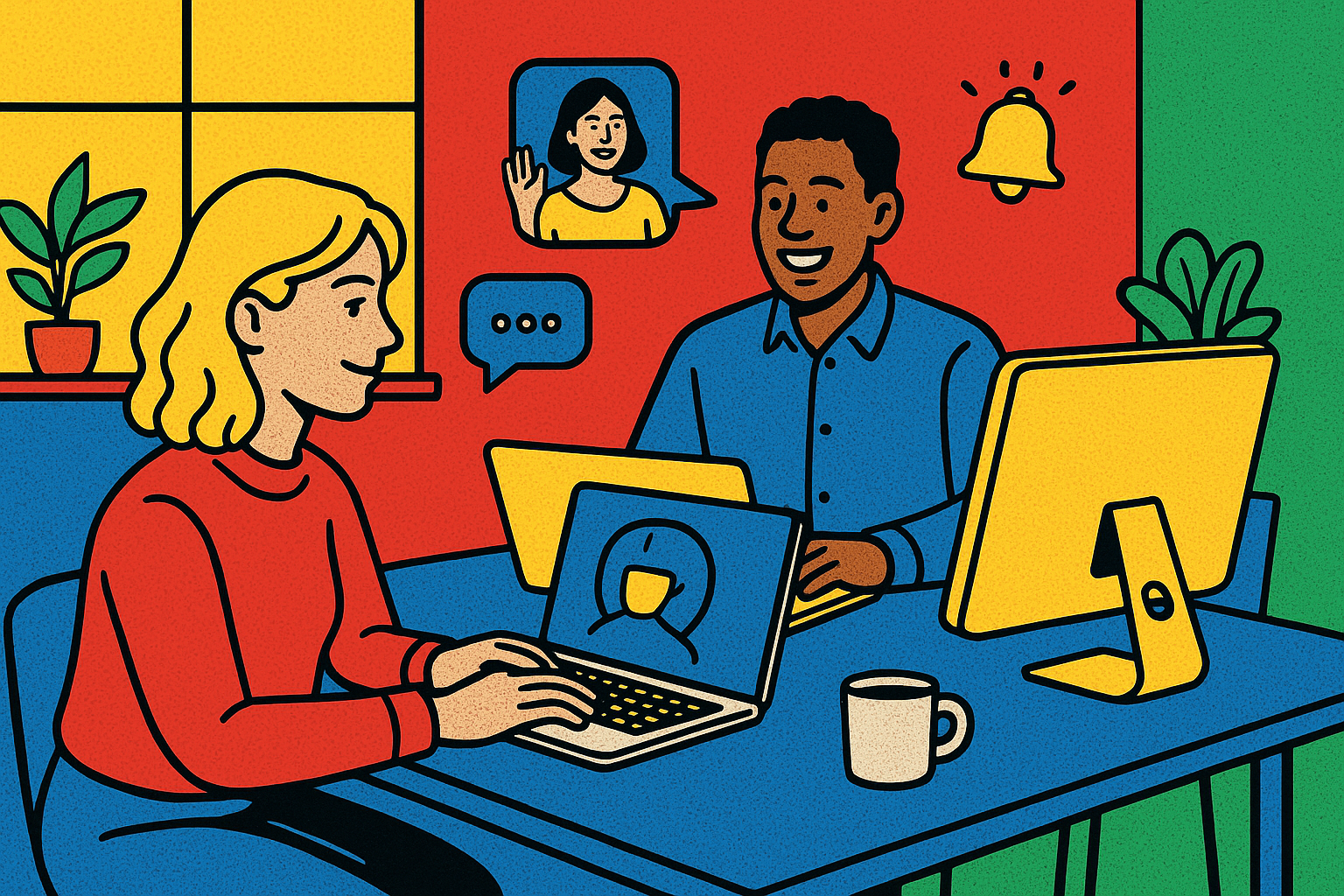
That is why modern communication tools matter so much to the independent professional. The right platform can reduce delays, centralize conversations, improve collaboration, and make remote work feel more connected. In a digital career, communication is not an administrative detail. It is part of the product.
We Used Technology to Multiply Our Capacity
Our career shift would have been slower and more expensive without digital tools. We used platforms for project management, video meetings, file sharing, invoicing, scheduling, research, and automation. But we also learned that collecting tools is not the same as building efficiency.
We evaluated each tool by asking one question: Does this help us create better work, communicate more clearly, or protect our time? If the answer was no, we removed it. A complicated collection of disconnected tools can create as much friction as no system at all.
Automation helped with repetitive tasks such as appointment reminders, onboarding forms, file organization, and basic reporting. Templates helped us respond quickly without making communication feel impersonal. Shared workspaces ensured that clients and collaborators could find current information without asking us to resend it.
The result was not that we worked constantly. The result was that we spent more time on high-value activities: strategy, creativity, problem-solving, and relationship building. Technology became leverage rather than distraction.
We Accepted That the First Version Would Be Uncomfortable
One of the hardest parts of changing careers was emotional, not technical. We had to tolerate uncertainty. Some months were stronger than others. Some proposals were ignored. Some projects revealed skills we still needed to develop. The temptation was to interpret every setback as evidence that we had made the wrong choice.
Instead, we began treating uncertainty as information. A weak response to an offer might mean the positioning was unclear. A difficult project might reveal a gap in our process. A quiet month might indicate that outreach had become inconsistent. We replaced self-judgment with analysis.
That mindset allowed us to improve without abandoning the larger goal. We adjusted our pricing, refined our services, improved our portfolio, and became more selective about clients. Progress was not a straight line, but it became visible once we measured the right things: qualified conversations, repeat business, referrals, delivery quality, and time spent on meaningful work.
We Built a Career Around Ownership
The greatest result was not simply earning money outside a traditional job. It was gaining ownership over the way we worked. We could choose which skills to develop, which clients to serve, where to work, and how to shape our weeks. That ownership created responsibility, but it also created energy.
For aspiring entrepreneurs, this distinction matters. Freelancing is not just a temporary escape from employment. It can be a practical education in entrepreneurship. You learn how to sell, negotiate, deliver, manage cash flow, understand customers, build systems, and make decisions with incomplete information. Every project becomes a lesson in running a business.
Of course, independent work is not for everyone. It demands initiative, resilience, self-management, and a willingness to keep learning. But neither is the conventional career path universally secure or satisfying. The important question is not whether freelancing is easy. The question is whether the freedom and responsibility align with the life you want to build.
The Shift Begins Before You Quit
If you are considering a move into digital freelancing, begin before you leave your current role. Select one valuable skill. Identify one painful business problem. Create one clear offer. Build a small portfolio. Speak with people in the market. Improve your communication process. Test your ability to generate opportunities while your existing income still provides stability.
Do not wait for confidence to arrive first. Confidence is usually the result of repeated action, not the prerequisite for it. Start with a manageable project, learn from the experience, and build evidence that your new direction can work.
The strongest career shifts are rarely dramatic leaps. They are sequences of deliberate decisions that eventually create a new reality. We did not discover a secret shortcut. We developed useful skills, communicated our value, built trust, used technology intelligently, and kept improving when the results were slower than we wanted.
That is how we achieved a more independent digital career—and it is why we believe more professionals should seriously consider creating one for themselves. The world of work is changing, and waiting for certainty is becoming its own kind of risk. If you are ready to take ownership of your next chapter, start by strengthening the systems that connect your skills to the people who need them. Check out the latest communication tools & features at www.conxhub.com.