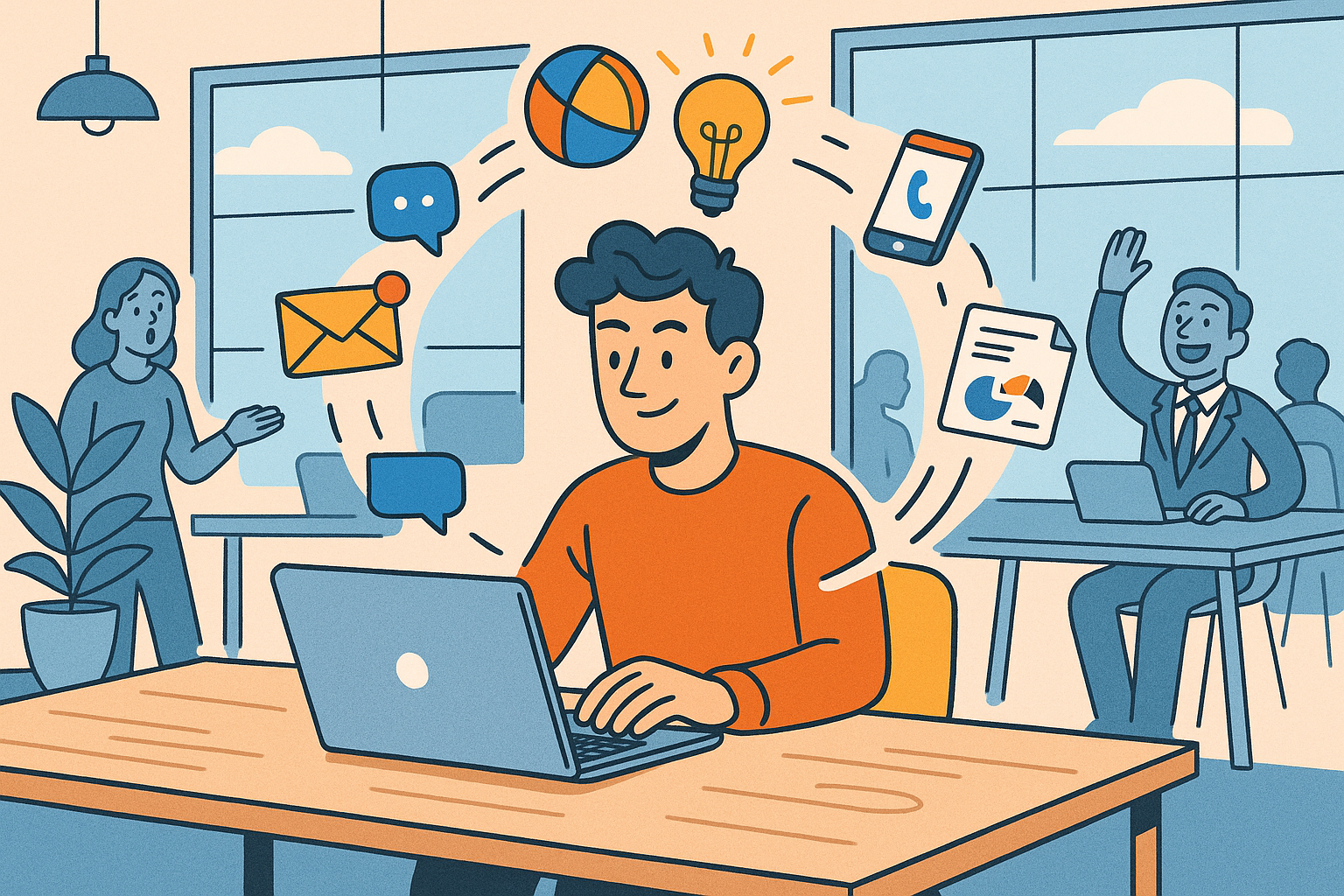
7 Misconceptions About Balancing Multiple Gigs — and How We Nailed the Digital Juggle
Startup founders live in the fast lane. Between product launches, investor calls, and team management, many of us juggle multiple projects at once—sometimes even multiple startups. The digital industry makes this easier than ever, but it also leads to a ton of myths about what it really takes to keep everything running smoothly. At Gigonomy, we’ve learned the ins and outs of balancing multiple gigs, and along the way, we’ve smashed a few misconceptions that hold many founders back. Here’s the truth behind the hustle—and how we achieved real results without burning out.
1. “You Can Only Focus on One Thing at a Time”
This is one of the oldest myths in the startup world. People assume that if you’re not 100% focused on a single project, you’re doomed to fail. But digital tools have reshaped productivity. With the right systems, you can absolutely maintain focus across different gigs.
Here’s what worked for us: we switched from traditional project boards to flexible online workspaces that allowed visibility across all ventures. Tasks were centralized, communication streamlined, and priorities became clear. Instead of losing focus, we actually gained perspective.
2. “Multiple Roles Mean Poor Work Quality”
Many founders fear that taking on several roles—or running side hustles—means spreading yourself too thin. But quality doesn’t suffer when you create processes that align with your strengths. We found success by defining clear boundaries around decision-making and delegating where possible.
Rather than viewing each gig as a separate entity, we saw them as interconnected parts of our overall growth strategy. This mindset shift was essential—our content creation, development, and marketing efforts started feeding into one another organically.
3. “Digital Tools Complicate Collaboration”
We’ve all experienced ‘tool fatigue’—too many apps, none of them talking to each other. But the myth that digital tools are a barrier is only true if you’re using the wrong ones. The right communication tools simplify, not complicate.
For example, when we adopted an integrated platform for team messaging and project tracking, we noticed an instant jump in transparency and morale. Conversations were faster, quicker decisions were made, and cross-functional collaboration improved dramatically. The key is picking tools that work with you, not against you.
4. “Burnout Is Inevitable When Balancing Multiple Gigs”
This one hits home for many founders. Hustle culture made us believe exhaustion equals success. But we learned that burnout comes not from the work itself but from mismanaged priorities and lack of boundaries.
Our breakthrough moment came when we started scheduling downtime like meetings—non-negotiable and essential. We also built digital routines to manage notifications and set communication windows. This helped the entire team operate like a well-tuned machine rather than a chaotic startup constantly chasing fires.
5. “Growth Stops When You Diversify”
Another myth is that splitting focus between multiple projects freezes momentum. In reality, we found that diversification created stability. Each gig supported the others through shared learning and resources. When one project hit a plateau, insights from another provided fresh growth strategies.
This cross-pollination effect was one of our biggest surprises. Instead of feeling stretched thin, our overall creative energy expanded. We were building systems that learned and adapted faster with every new challenge we took on.
6. “Only Big Teams Can Handle Multiple Projects”
At Gigonomy, we started lean—and stayed that way for a long time. So we quickly learned that size doesn’t determine your capacity; organization does. Small, agile teams can manage multiple gigs brilliantly when empowered with flexibility and autonomy.
Our solution? Embrace a remote-first mindset. This unlocked access to global talent, asynchronous workflows, and time zone coverage that kept progress steady around the clock. We no longer felt the pressure of physical office hours; digital freedom became our biggest productivity hack.
7. “You Can’t Build a Culture Across Multiple Ventures”
Lastly, many believe that running several projects fractures organizational culture. We’ve proven that the opposite can be true. Culture isn’t tied to one product or team—it’s about shared values. We focused on openness, curiosity, and accountability as universal traits across all our gigs.
By aligning everyone under these core principles, we ensured that no matter which project someone worked on, the vibe remained consistent. This interconnected culture fueled innovation and trust—two essentials for digital success.
Our Journey: Turning Chaos Into Clarity
Achieving balance across multiple digital ventures wasn’t about working harder—it was about working smarter. We built systems that supported context-switching without losing focus. Every gig taught us something new about resource allocation, time management, and communication flow.
More importantly, we learned that clarity comes from connection. Once we improved how we communicated—both internally and externally—our efficiency skyrocketed. That’s why, to this day, we invest in evolving our communication stack and encourage others to do the same.
Conclusion: Balancing Multiple Gigs Is the New Normal
In the digital economy, juggling multiple gigs isn’t the exception—it’s the future. But it doesn’t have to mean chaos or burnout. By rejecting the old myths and embracing smarter digital workflows, we’ve found balance, creativity, and profitability in every project we touch.
If you’re a startup founder ready to streamline your projects and boost your communication flow, it’s time to explore what next-gen digital collaboration can do for your business. Check out the latest communication tools & features at www.conxhub.com and start building your connected future today.